
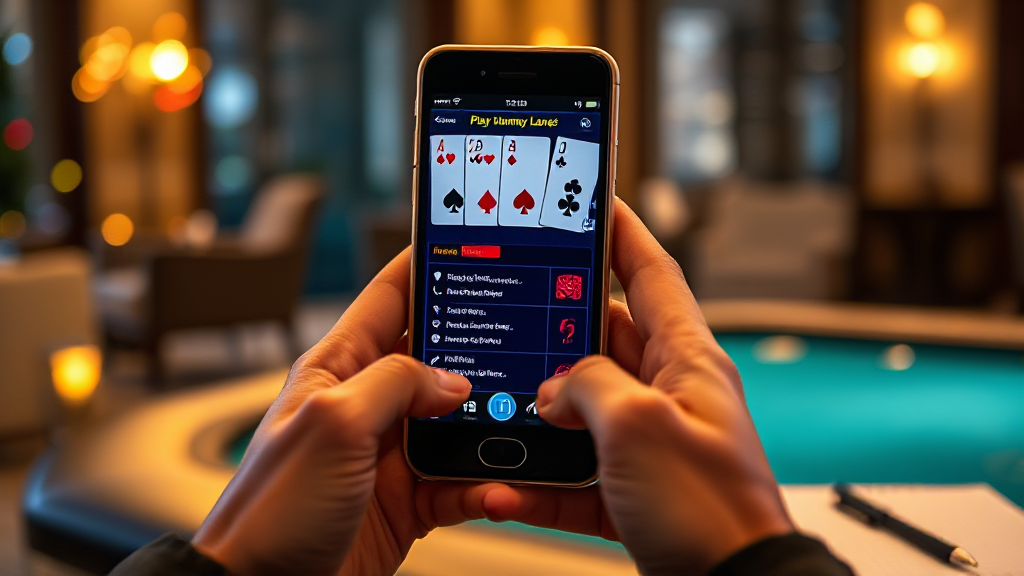
Beginner Rummy Night vs. Regular Play: What Actually Changes
A client of mine, a careful woman in her late thirties who runs a small design studio, once asked me to sit with her while she opened a rummy app for the very first time. She had watched her brother play for years, had listened to him narrate his hands over dinner, and assumed she already understood the rhythm of the game. Twenty minutes later she was staring at a sorted hand, unsure whether to discard the nine of hearts or break up a promising sequence, and she said something I have heard from almost every beginner: “I thought I knew how this worked until it was my turn.” That gap between watching and playing is where the real story of a first rummy session lives, and it is worth walking through slowly, especially if you are the sort of person who prefers to understand a thing before committing to it.
If you want a structured place to start rather than a random app pulled from a search result, the sensible first move is to look at a directory that explains what each platform actually offers. That is precisely the role of First Time Play Rummy Game guidance on Play Rummy Lane, which compares apps on mobile, outlines bonus and withdrawal details, and points to Android installation information before you commit to anything. Treating that comparison step as part of the game itself, rather than a chore before it, changes how the whole experience feels.
Watching Versus Playing: The First Real Difference
My client’s brother plays the way most experienced players do: fast, almost casually, discarding a card before anyone has finished drawing. What she did not realise is that this speed is not confidence in the moment. It is the result of hundreds of repetitions that have compressed a dozen small judgements into something that looks like instinct. For a seasoned player, the decision to keep a pair of sevens instead of chasing a run is automatic. For a beginner, that same decision arrives as a genuine fork in the road, and the mental cost of choosing is high.
This is the first thing that changes when you move from observer to participant. The experienced player is managing probability. The beginner is managing attention. Every card that passes across the screen demands a fresh evaluation, and by the middle of the first hand the beginner is already tired in a way the experienced player never notices. It is not a skill gap so much as an energy gap, and it closes only with repetition.
What surprised my client most was how much she second-guessed herself after the fact. She would discard a card, watch it get picked up, and immediately construct a story about how she should have known. Experienced players do this too, but they do it less, because they have learned that a single discard is not a verdict on their ability. For a beginner, every discard feels like a small examination.
Rules, Sequences, and the Quiet Arithmetic of a First Hand
The rules of rummy are not complicated in isolation. You draw, you arrange, you discard, and you aim to form valid sets and sequences before your opponent does. Where beginners stumble is not the rules themselves but the way the rules interact under time pressure. A set of three kings is easy to recognise. A potential sequence that needs one specific card, which may or may not still be in the deck, is a different kind of problem entirely.
An experienced player scans a hand and immediately sorts it into three categories: cards that are already useful, cards that could become useful, and cards that are dead weight. A beginner tends to treat every card as equally important, which is why first hands often feel cluttered and slow. My client, for instance, held onto a lone queen for four turns because it matched the suit of a sequence she was building, even though the queen was never going to fit. She was not wrong to value it. She was wrong to value it equally with everything else.
There is also the matter of the discard pile. Experienced players read it like a logbook, noting which suits have been abandoned and which numbers have become scarce. Beginners often ignore it entirely, focused only on their own hand. This is the single largest difference between a first session and a fiftieth, and it is the one most beginners only discover after losing a few hands they felt sure they had won.
My client’s turning point came in her third hand, when she finally looked at the discard pile before drawing. She picked up a card she would otherwise have passed over, completed a sequence two turns later, and finished the hand with a look of genuine surprise. Nothing about the rules had changed. Her attention had simply widened.
Money, Bonuses, and the Lessons That Only Arrive Later
The financial side of a first rummy session is where caution matters most, and it is the part beginners tend to rush. Experienced players treat bonuses as a detail to be read, not a headline to be trusted. They check withdrawal terms, minimum thresholds, and processing times before they deposit anything, because they have learned that a generous-looking offer can come with conditions that make it difficult to actually use.
A beginner, by contrast, often signs up because a banner promised something appealing, then discovers the fine print later. My client did exactly this on a different app years ago, and the experience made her wary of every platform afterward. That wariness is healthy. Before you install anything, it is worth reviewing the bonus and withdrawal details on a comparison site, checking what Android installation requires, and confirming that the app you are considering is appropriate for adults aged 18 and over. Responsible play is not a slogan; it is a set of habits you build before your first hand, including a budget and a timer.
What experienced players understand that beginners do not is that the game is not a sprint toward a payout. It is a skill you develop over months, and the money is a byproduct of that skill rather than the point of it. My client, once she stopped thinking about the outcome and started thinking about the hand in front of her, played noticeably better. That shift is not unique to her. It is the same shift every careful player makes, usually after a few sessions of frustration.
By the end of that first evening, my client had lost more hands than she won, and she was fine with it. She had learned to read the discard pile, to stop hoarding dead cards, and to check terms before trusting a bonus. She had also learned that the difference between watching rummy and playing it is not knowledge. It is attention, patience, and a willingness to lose a few hands while you build the instincts that experienced players make look effortless. If you are approaching your own first session, treat it as practice rather than a test. The rules will come quickly. The judgement takes longer, and that is exactly as it should be.